
- Home
- Stucco Base Coats, Flat and Fully Cured
Stucco Base Coats, Flat and Fully Cured
The base coat is the body of any stucco or EIFS wall. It carries the reinforcement, sets how flat the wall looks and holds the finish. When it is thin, wavy or rushed, no finish coat can hide it.
- Scratch & brown coats
- EIFS base with mesh
- Flat, true planes
- Base coat repairs

Request a consultation & estimate
Residential or commercial. We’ll get back to you to set up an evaluation.
We never share your information. Prefer to talk? Call (888) 592-1304.
The layer that does the heavy lifting
On a hard coat wall the base coat is really two coats. The scratch coat is pushed through and around the lath until the metal is fully wrapped, then raked with horizontal grooves. Once it has cured, the brown coat goes over it to bring the wall to full thickness and is straightened with a rod and floated so it is flat and slightly rough for the finish to grab.
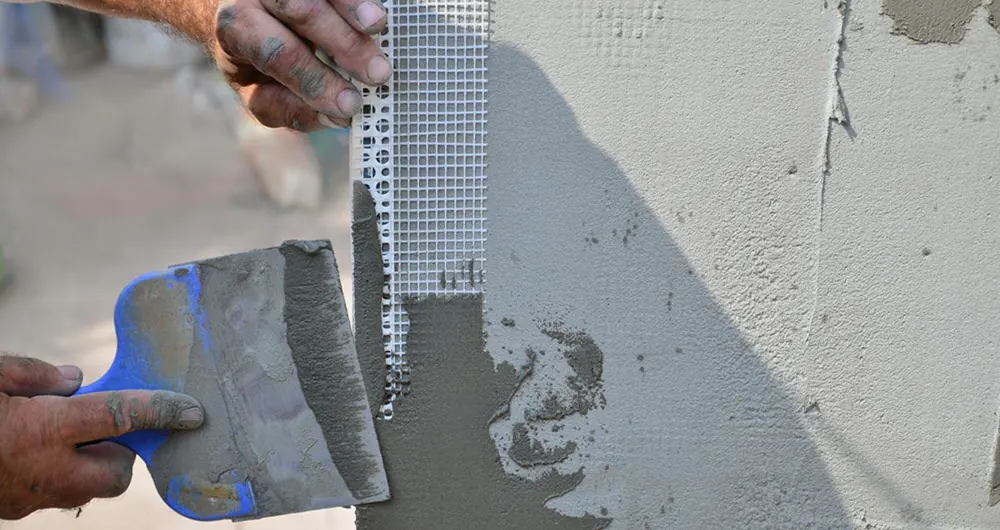
An EIFS base coat works differently. It is a thin polymer-modified layer troweled over the foam board with fiberglass reinforcing mesh pressed into it while wet. The mesh has to sit fully inside the base coat, not on the foam and not showing on the surface, and laps between rolls need to overlap so cracks cannot form along the seams.
In both systems, base coat thickness and flatness show up years later as cracks, shadows along seams or a wall that ripples in low sun. See stucco mesh and lath for the reinforcement and EIFS for how the full system goes together.
Signs of a poor base coat
These problems usually trace back to the base coat rather than the finish on top of it.
Cracks along lath lines
Straight cracks at lath laps or fasteners suggest the scratch coat did not fully embed the metal.
Visible mesh pattern
A grid showing through EIFS finish means the mesh sat too close to the surface of the base coat.
Wavy walls
Ripples and humps that appear in raking light come from a brown coat or EIFS base that was never straightened.
Seam cracks in EIFS
Cracks running along board joints or mesh edges point to missing laps or a base coat too thin to bridge them.
Soft or sandy base
A base that crumbles when probed was overwatered or dried before it cured.
Finish peeling off
Finish coats that release in sheets often sat on a dusty, slick or uncured base.
Often paired with this work
Most wall problems involve more than one part of the envelope.
Stucco
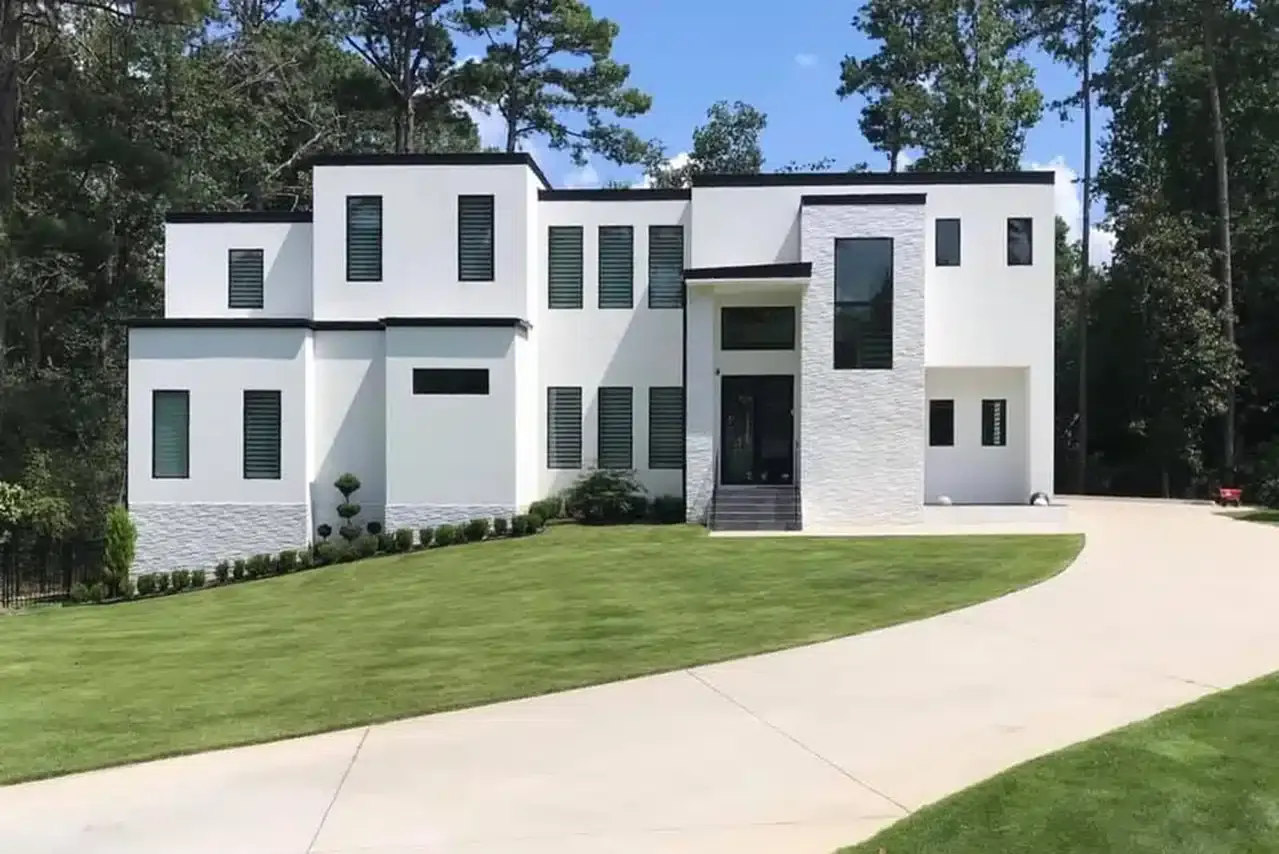
Stucco is a family of wall systems, not a single product.
Learn more
Stucco Contractor
Plenty of crews can trowel a finish coat.
Learn more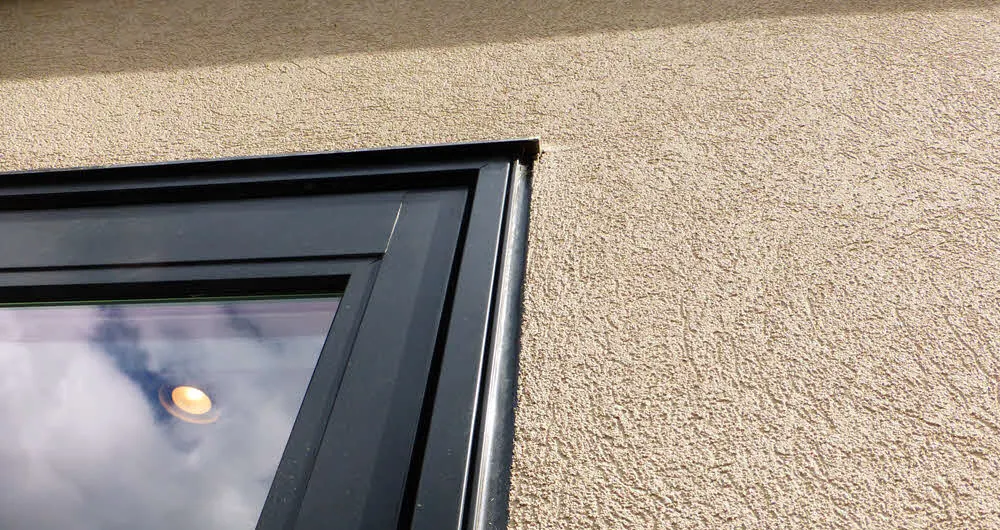
Hard Coat Stucco
Three-coat portland cement stucco is the original masonry finish: dense, durable and solid to the knock.
Learn more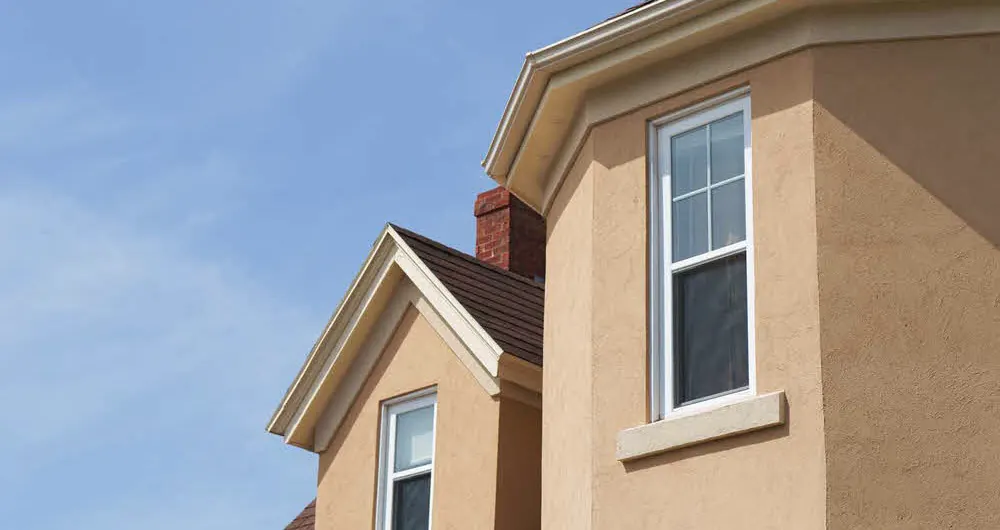
Traditional Stucco Finish
The finish coat is the part of a stucco wall everyone sees.
Learn moreStucco Cement
Most cracking in cement stucco is decided at the mixing board and in the first days after application.
Learn more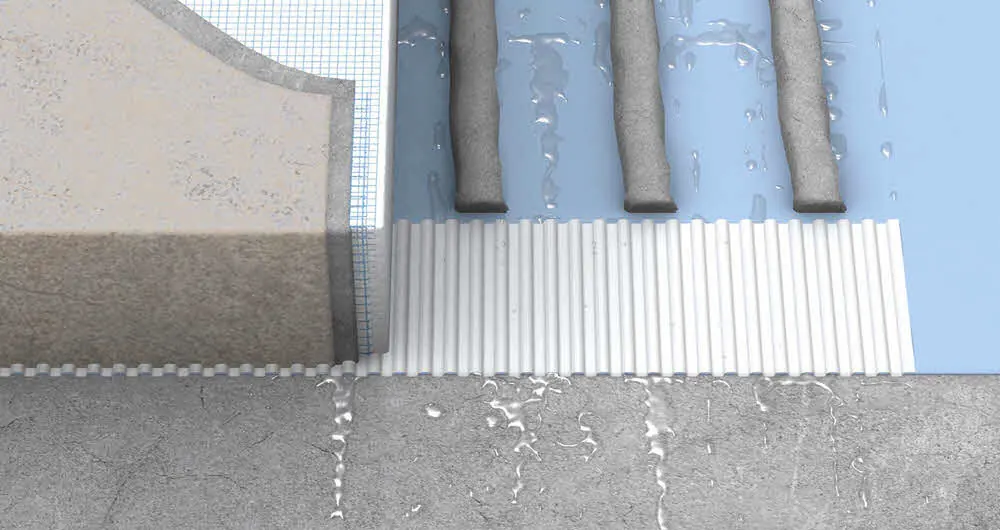
Stucco Mesh & Lath
Reinforcement is buried inside the wall, so nobody sees it until cracks appear.
Learn moreHard coat base vs EIFS base coat
The name is the same, but the material and the job are not. A hard coat base is thick cement plaster that gives the wall its strength. An EIFS base coat is a thin, flexible layer whose job is to hold the mesh and protect the foam from impact and weather.
That difference changes repairs too. A hard coat base is cut back and rebuilt in two coats. An EIFS base is repaired by cutting out the damaged area, replacing foam if needed and lapping new mesh well past the edges into fresh base coat. For high-traffic areas we can add a heavier impact mesh; see stucco impact repair.
| Feature | Hard coat base | EIFS base coat |
|---|---|---|
| Material | Cement, sand, lime | Polymer-modified base |
| Reinforcement | Metal lath | Fiberglass mesh |
| Coats | Scratch and brown | One or two passes |
| Thickness | Most of the wall | Thin layer |
| Repair method | Rebuild both coats | Lap new mesh in |
How we apply a base coat
Whether it is cement over lath or polymer base over foam, the steps follow the same logic: embed, straighten, cure.
Prepare the surface
Lath is checked for fastening and laps, or foam board is rasped flat and joints filled, before any base goes on.
- Lath fastened and lapped
- Foam rasped flat
- Openings reinforced
Embed & build
The scratch coat wraps the lath, or the mesh is pressed fully into wet EIFS base, then the wall is built to thickness.
- Full embedment
- Laps overlapped
- Thickness checked
Straighten & cure
We rod and float the surface flat, check it in raking light and let it cure before the finish coat.
- Planes straightened
- Raking-light check
- Cured before finish
What our customers say
Homeowners and long-time commercial clients on working with ASR.
“A quality honest contractor is hard to come by – I’d use ASR for anything I could.”

“Outstanding results and very professional in every aspect during the construction and painting work done. Excellent follow-up by the President to ensure satisfaction during and after the job was completed.”
“We had numerous issues with the stucco on our newly constructed home… The stucco has a unique texture and is pigmented so we were really concerned about getting a good aesthetic match on the repairs… The stucco finish looks incredible and perfectly matches the house in color and texture.”
Base coat questions
What people ask about the hidden middle layer of a stucco wall.
What is the difference between the scratch coat and the brown coat?
How long should a base coat cure before finishing?
Can a bad base coat be fixed without removing the wall?
Why can I see a grid pattern on my EIFS wall?
Do you repair base coats on commercial buildings?
Get the middle layer right
Tell us about the wall, new or damaged. We will look at the base coat and explain what it needs.
Request a consultation & estimate
Homeowners and commercial clients alike: tell us about the property and what you are seeing.
- Call(888) 592-1304
- E-mailinfo@advstucco.com
- Headquarters138 Mountain Brook Dr, Canton, GA 30115
- HoursMon–Fri 8:30 am – 5:30 pm
Send us your project details
Residential or commercial. We’ll get back to you to set up an evaluation.
We never share your information. Prefer to talk? Call (888) 592-1304.