
- Home
- Residential
- Fixing Stucco: Know When to Call
Fixing Stucco: Know When to Call
Some stucco damage is small enough to handle with a tube and a putty knife. Some of it is a sign that water has been working behind your walls for a while. Here is how to tell the difference before you buy supplies.
- What you can patch
- What to leave alone
- Warning signs of water
- Honest advice first

Request a consultation & estimate
Residential or commercial. We’ll get back to you to set up an evaluation.
We never share your information. Prefer to talk? Call (888) 592-1304.
A small crack or a bigger story?
Homeowners usually call us after they have already tried something. A bag of patch from the hardware store, a bead of caulk, a fresh coat of paint. Sometimes that was exactly the right move. Other times the patch covered up the one clue that showed where rain was getting into the house.
The question to ask is not how big the damage looks but whether the wall behind it is dry. A fine crack on a sunny gable that has been the same width for years is mostly cosmetic. A crack that runs from the corner of a window, has a dark streak below it or feels soft when you press nearby is telling you something different, and no surface product will fix it.
If you are unsure, take a few photos in daylight, note which side of the house it is on and whether it gets worse after storms, and send them to us. We will tell you plainly if it is a do-it-yourself job. When it is not, our leak detection visit finds the source, and our residential services cover the repair.

Six home fixes that make it worse
Each of these is well meant, and each one we see undone on a regular basis.
Pressure washing
High pressure drives water into cracks and can erode the finish, especially on synthetic stucco and EIFS.
Caulking every crack
Smears of caulk trap dirt, never match the texture and seal water in as easily as they keep it out.
The wrong paint
Ordinary latex or oil paint over cement stucco can hold moisture in the wall and start to peel.
Sealing the weep screed
The metal strip at the bottom of the wall is where water drains out; mulch, caulk or paint there blocks it.
Indoor spackle outside
Drywall compounds soften in rain and shrink as they dry, so they fall out of exterior holes within months.
Ignoring a stain
Dark streaks under windows or at roof corners usually mean water is already behind the stucco.
Often paired with this work
Most wall problems involve more than one part of the envelope.
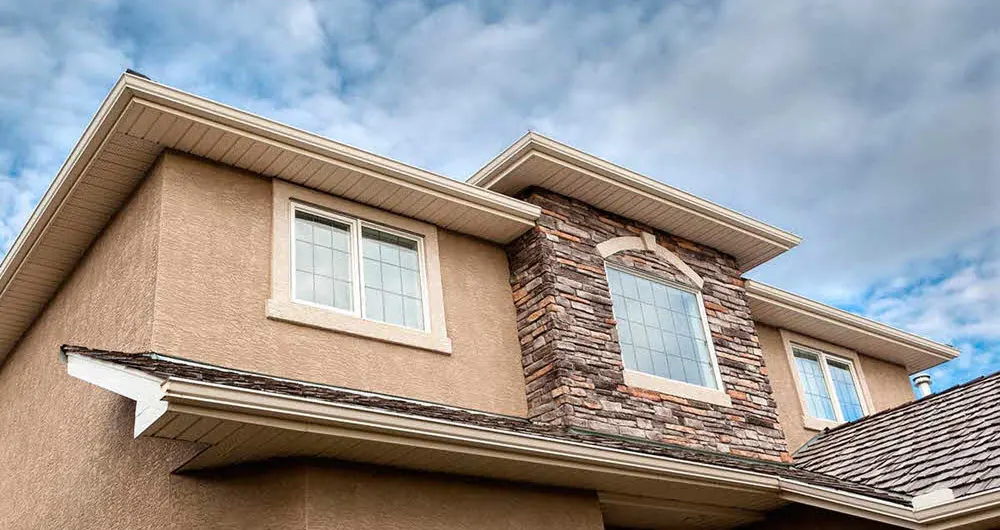
Stucco Repair
A crack or a stain is usually the visible end of a water problem.
Learn more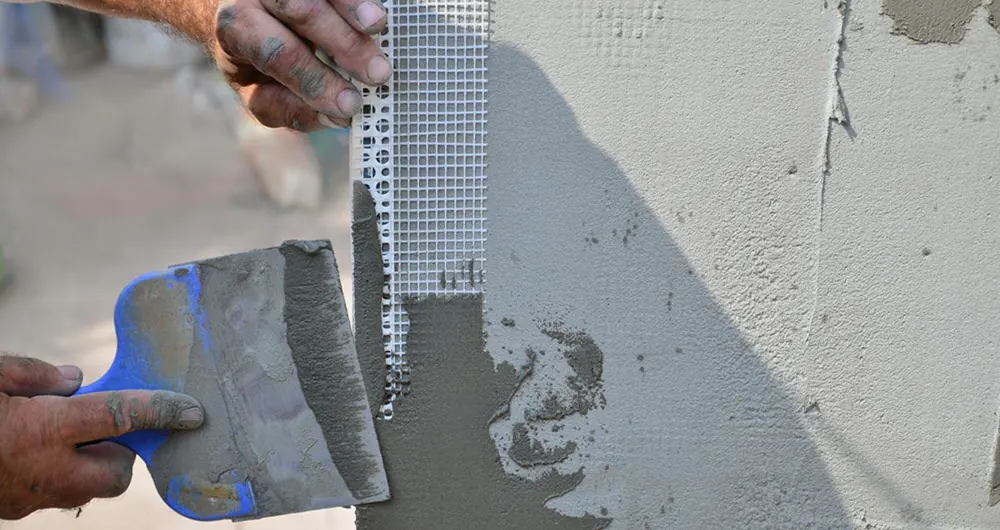
Repair Stucco
A stucco wall is a stack of layers, and a repair only lasts when every layer is put back.
Learn more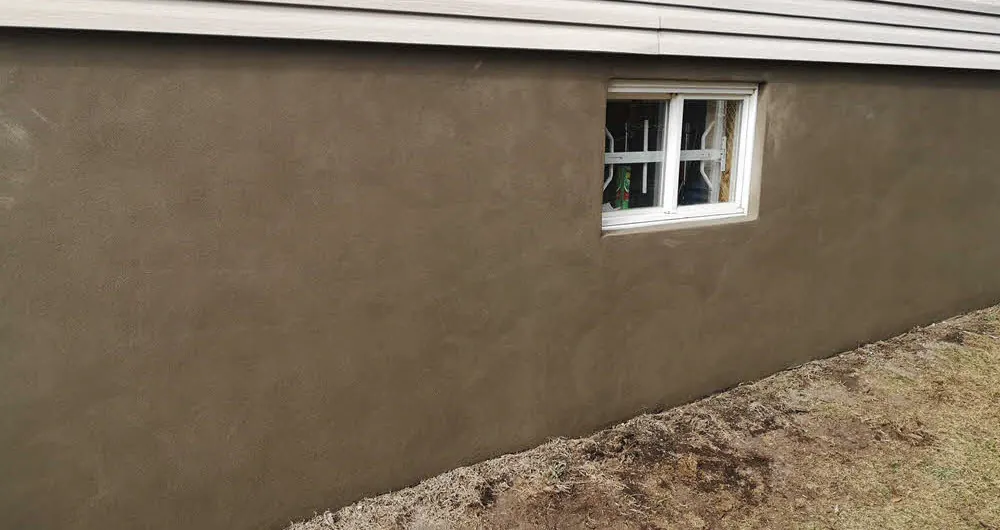
Fix Stucco Cracks
Not every crack in stucco is a problem, but the ones that are rarely fix themselves.
Learn more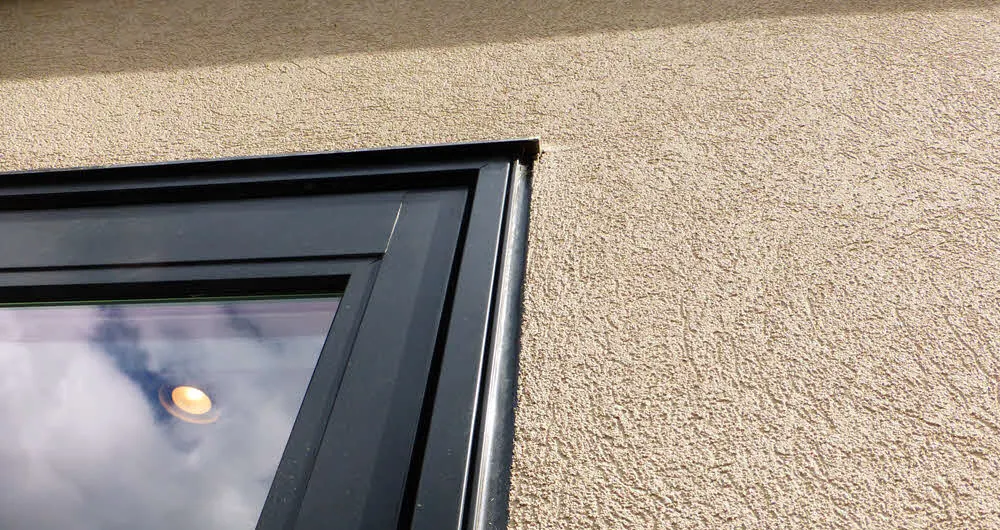
Fill Stucco Holes
Every fixture that comes off a stucco wall leaves fastener holes, a hole for wiring and often a shadow of the old outline.
Learn more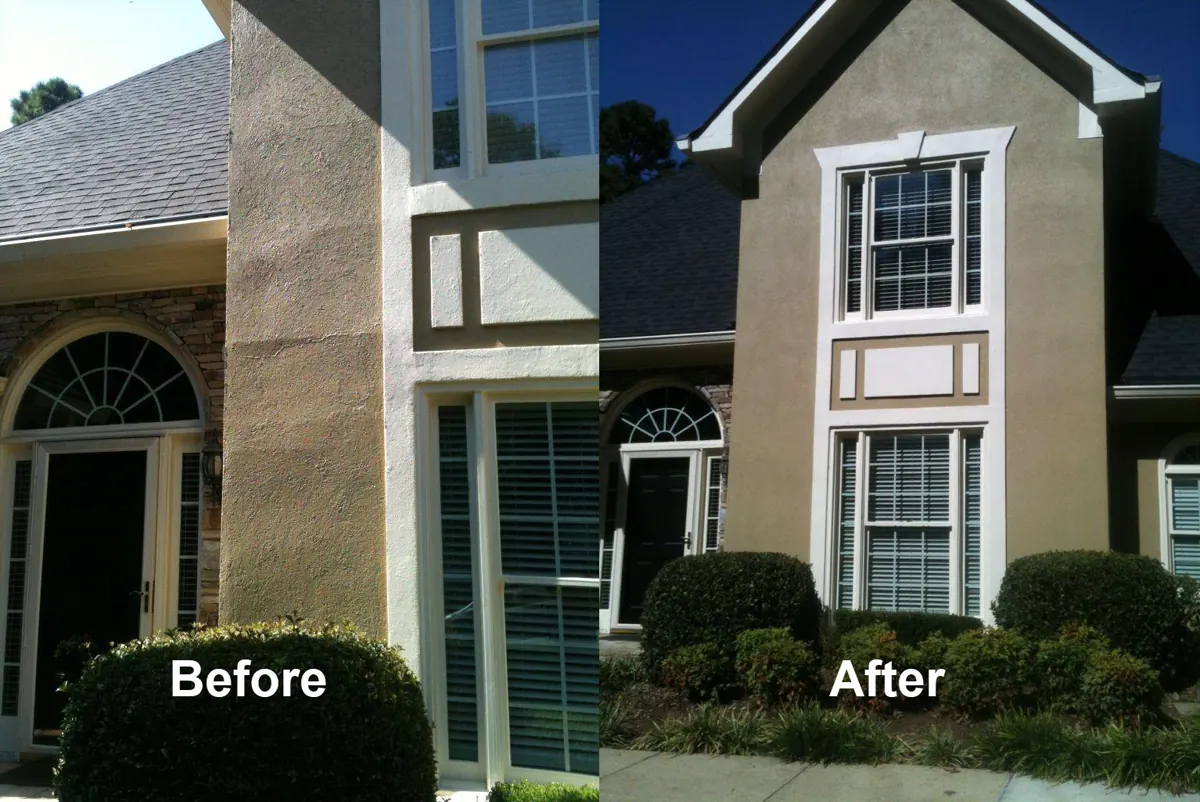
Stucco Patch
The hard part of patching stucco is not filling the damage.
Learn more
Stucco Impact Repair
Storefronts, drive-throughs, loading areas and parking-side walls take hits from vehicles, carts, hail and equipment.
Learn moreDIY or professional: a rough rule
Use this as a starting point, not a diagnosis. The deciding factor in almost every row is moisture: dry and stable damage can often be patched by a careful homeowner, while anything tied to a leak needs the wall opened and rebuilt.
If you do patch something yourself, use an exterior stucco patch, mist it while it cures and expect the color to differ. If a patch you made keeps cracking around its edges, that is useful information too, and worth a call.
| What you see | Homeowner patch? | Call a pro? |
|---|---|---|
| Nail or screw hole, dry wall | Usually fine | If it must disappear |
| Hairline crack, no stain | Can be filled | If it keeps widening |
| Crack at window corner | Not advised | Yes, check for water |
| Soft or hollow spot | No | Yes, soon |
| Stain below a roof line | No | Yes, likely a flashing |
What happens after you reach out
We keep homeowners in the loop at every stage, from the first photo to the final walkthrough.
Tell us what you see
Send the form with a short description and photos if you have them. We will ask a few questions about when it appeared and how it changes with weather.
- Photos welcome
- Location on the house
- Any past repairs
On-site look & readings
We visit, check moisture around the problem with a probe and explain in plain language whether it is cosmetic or a leak.
- Moisture checked
- Cause explained
- Written scope to follow
Repair & walkthrough
If you approve the quote in Jobber, we schedule the work, keep you updated online and walk the finished repair with you.
- Approve online
- Progress messages
- Final walkthrough together
What our customers say
Homeowners and long-time commercial clients on working with ASR.
“Great attention to detail and workmanship. Really appreciate the effort to carefully caulk all stucco penetrations and amazingly good job of matching the stucco color since I had the stucco painted 5 years before.”
“We had a section of our wall that was crumbling, and I was worried the repairs would stand out. Not only did they fix the issue, but they matched the color and texture so perfectly that I honestly can’t tell where the damage was.”

“Excellent customer service and craftsmanship! I have used Darrin and the team several times and have never been disappointed!”
Fixing stucco at home: your questions
What homeowners ask before deciding whether to tackle it themselves.
Can I fix stucco myself?
What product should I use to patch stucco?
How do I know if there is water behind my stucco?
Will a professional repair match my house?
Is it worth fixing stucco before selling a house?
Not sure if it's a DIY job?
Send us a photo and a short note. We will give you a straight answer, even if the answer is that you can handle it.
Request a consultation & estimate
Tell us about your home and what you are seeing, and we will set up an evaluation.
- Call(888) 592-1304
- E-mailinfo@advstucco.com
- Headquarters138 Mountain Brook Dr, Canton, GA 30115
- HoursMon–Fri 8:30 am – 5:30 pm
Send us your project details
Residential or commercial. We’ll get back to you to set up an evaluation.
We never share your information. Prefer to talk? Call (888) 592-1304.