
- Home
- Painting Stucco Without Trapping Water
Painting Stucco Without Trapping Water
Stucco is not wood siding, and the wrong paint can seal moisture inside the wall. We repair cracks and sealant joints first, then choose a breathable masonry paint or an elastomeric coating for how your wall really behaves.
- Breathable masonry paint
- Elastomeric coatings
- Cracks repaired first
- Homes & commercial

Request a consultation & estimate
Residential or commercial. We’ll get back to you to set up an evaluation.
We never share your information. Prefer to talk? Call (888) 592-1304.
The paint that fits your wall
Hard coat stucco is porous. It takes on a little moisture when it rains and lets it out again as vapor when the sun comes back. A coating that stops that outward drying can leave water sitting in the base coat and sheathing, where it shows up later as blisters, peeling or dark streaks.
Breathable masonry paints, usually high-quality acrylics made for cement surfaces, let vapor pass while shedding liquid water. Elastomeric coatings are thick and flexible; they bridge hairline cracks and stop wind-driven rain, which helps on exposed or cracking walls. They also restrict vapor more, so they belong on walls that are dry and detailed correctly.
Either way, paint is the last step. Open cracks, failed sealant around windows and missing kick-out flashings need fixing before any coating goes on. Painting over them just hides the evidence. For full waterproofing systems see stucco waterproofing coatings; for crack work see stucco crack repair.
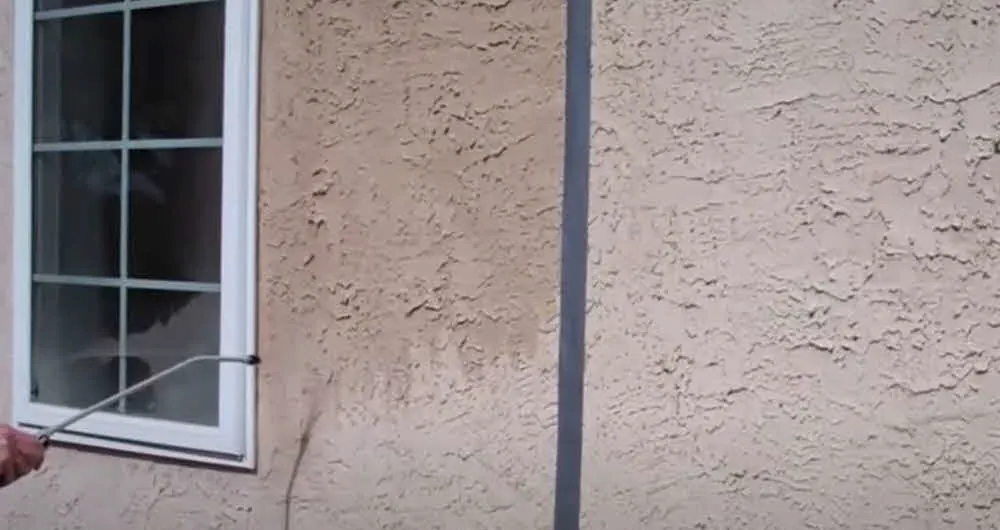
Signs the wall needs work before paint
Any of these means a fresh coat of color will not last, and may make the underlying problem worse.
Open cracks
Cracks wider than a hairline let water past any paint film. They are routed, filled and textured before coating.
Blistering paint
Bubbles in old paint usually mean moisture is trying to escape from behind a coating that will not let it.
Efflorescence
White, powdery salt deposits show water is moving through the stucco. The source has to be found first.
Failed sealant
Cracked or shrunken caulk at windows, doors and penetrations is replaced, never just painted over.
Chalking surface
Old paint that rubs off on your hand will not hold a new coat until it is cleaned and primed.
Mildew & algae
Green or black growth on shaded walls is washed and treated so it does not grow back under the new paint.
Often paired with this work
Most wall problems involve more than one part of the envelope.

Stucco Finishes
The finish coat is the part of a stucco wall everyone sees and the part the weather hits first.
Learn more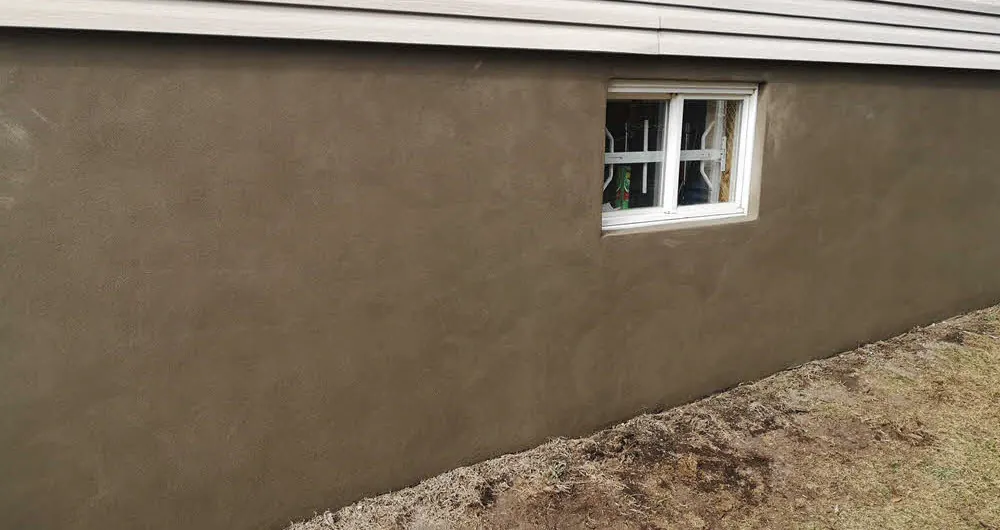
Stucco Textures
Texture is what makes a stucco wall look like stucco, and it is the first thing that gives away a bad repair.
Learn more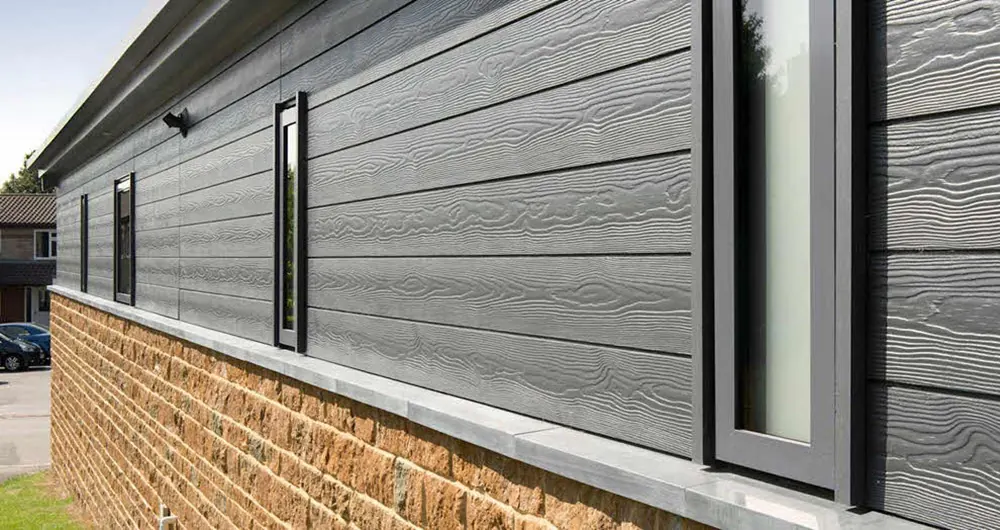
Painting
Most painters cover what they find.
Learn more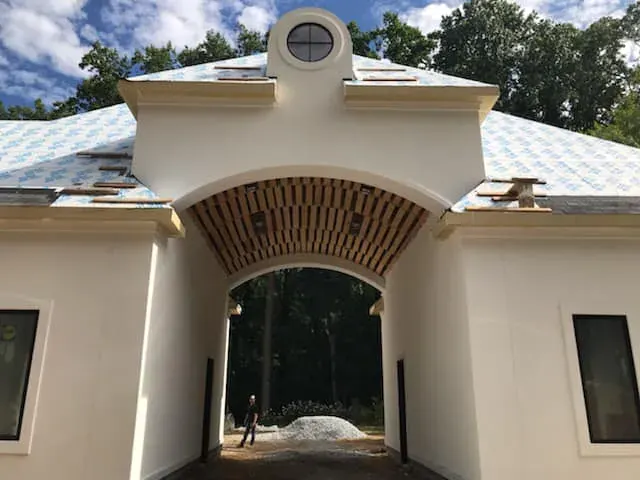
Stucco Foam Trim
Foam trim gives a stucco wall its shadow lines: window surrounds, belly bands, quoins and sills.
Learn more
Exterior Foam Trim & Molding
Cornices, bands, column caps and keystones give a hotel, retail center or office building its character.
Learn more
Stucco Molding
Before foam trim existed, stucco moldings were run in place with a shaped knife.
Learn moreMasonry paint vs elastomeric coating
For a sound, dry wall that just needs color, a breathable acrylic masonry paint is often the better long-term choice. For a wall with many hairline cracks or heavy rain exposure, an elastomeric coating can buy years of protection, as long as moisture readings say the wall is dry underneath.
We take readings before recommending either. If the wall is already wet, the job is a repair first, and paint comes later. Walls previously coated with elastomeric usually need the same type again, or careful prep before switching.
| Coating | Best for | Caution |
|---|---|---|
| Acrylic masonry paint | Sound walls, color refresh | Will not bridge cracks |
| Elastomeric coating | Hairline cracks, exposed walls | Wall must be dry |
| Mineral or silicate paint | Uncoated cement stucco | Not over old acrylics |
| Oil or vinyl house paint | Not recommended | Traps moisture |
How we paint a stucco wall
Most of the work on a stucco paint job happens before the first coat of color goes on.
Inspect & test
We check the wall for cracks, staining and soft spots, and probe suspect areas with a moisture meter.
- Moisture readings taken
- Old coating identified
- Coating recommended
Repair & prepare
Cracks are repaired and textured, sealant joints replaced, the surface washed and primed where needed.
- Cracks filled and blended
- Joints resealed
- Surface cleaned
Coat & inspect
Paint or elastomeric is applied at the manufacturer's coverage rate, with the cure time between coats respected.
- Correct film thickness
- Two coats typical
- Final walkthrough
Paint peeling off your stucco?
That is often a moisture problem. Let us test the wall before you repaint.
What our customers say
Homeowners and long-time commercial clients on working with ASR.
“I have worked with Darrin on several occasions over the last few years. He is extremely knowledgeable and highly professional. He is reliable and reasonably priced. He does good work.”
“ASR has repaired the bulk of our recent new home that was wrought damaged stucco, termite, water, and mold damage. They completely transformed our home from the inside and out, providing consistent communication and quality craftsmanship.”

“Each and every person has a positive attitude that is projected with every task, duty and responsibility. The team did a terrific job on safety, maintenance and housekeeping, in addition to applying their craft(s).”
Stucco paint questions
Common questions about painting stucco homes and buildings.
What kind of paint should be used on stucco?
Can elastomeric paint cause problems on stucco?
How often does stucco need repainting?
Can you paint EIFS?
Do you paint commercial stucco buildings?
Paint stucco the right way
Call (888) 592-1304 or send the form. We will test the wall, repair what needs it and recommend the right coating.
Request a consultation & estimate
Homeowners and commercial clients alike: tell us about the property and what you are seeing.
- Call(888) 592-1304
- E-mailinfo@advstucco.com
- Headquarters138 Mountain Brook Dr, Canton, GA 30115
- HoursMon–Fri 8:30 am – 5:30 pm
Send us your project details
Residential or commercial. We’ll get back to you to set up an evaluation.
We never share your information. Prefer to talk? Call (888) 592-1304.