
- Home
- Commercial
- Sealant Replacement Before Leaks Spread
Sealant Replacement Before Leaks Spread
Aged sealant on a commercial building fails quietly, one joint at a time, until tenants report water. We cut out failed sealant on stucco and EIFS facades, repair what is behind it and install new joints, from a single elevation to a full building program.
- Failed joints cut out
- Edges repaired first
- Whole-building programs
- Phased for tenants

Request a consultation & estimate
Residential or commercial. We’ll get back to you to set up an evaluation.
We never share your information. Prefer to talk? Call (888) 592-1304.
Why failed sealant has to come out
When a property manager sees cracked or gapped joints, the tempting fix is to run a new bead over the top. On a commercial facade that rarely holds. New sealant cannot bond through old, chalky or contaminated material, and a smeared-over joint hides the gap without closing it.
Proper replacement means removing the old sealant completely, cleaning both joint faces back to sound substrate and checking the edges of the stucco or EIFS. On EIFS especially, years of water at a failed joint can soften the base coat or wet the foam behind it, and those edges need repair before new sealant goes in. Then backer rod, primer where required and new sealant are installed to the joint design.
We replace sealant on retail centers, hotels, offices, self-storage and multifamily buildings. If you are planning ongoing care rather than a one-time fix, look at stucco maintenance. For new joint installation details, see exterior joint sealants.

How to spot failed sealant
A walk along each elevation with binoculars or from a lift will show most of these. Any one of them means the joint is no longer sealed.
Adhesive failure
The bead has pulled cleanly away from one face, leaving a thin gap along the stucco or frame edge.
Cohesive splitting
The sealant has torn through its own middle, usually because the joint was too shallow or the product too stiff.
Hardening & chalking
UV exposure has turned the sealant hard, cracked and powdery so it no longer stretches when the joint opens.
Staining below joints
Dark streaks, efflorescence or mildew under windows and joints show water running out of the wall.
Missing sections
Pieces of sealant have fallen out or were never installed, often at corners, penetrations and old sign locations.
Interior complaints
Tenants report damp carpet, stained ceilings or musty rooms along an exterior wall after storms.
Often paired with this work
Most wall problems involve more than one part of the envelope.

Sealants
On a stucco or EIFS house, the narrow bead of sealant around each window, door and pipe does more to stop rain than the wall itself.
Learn more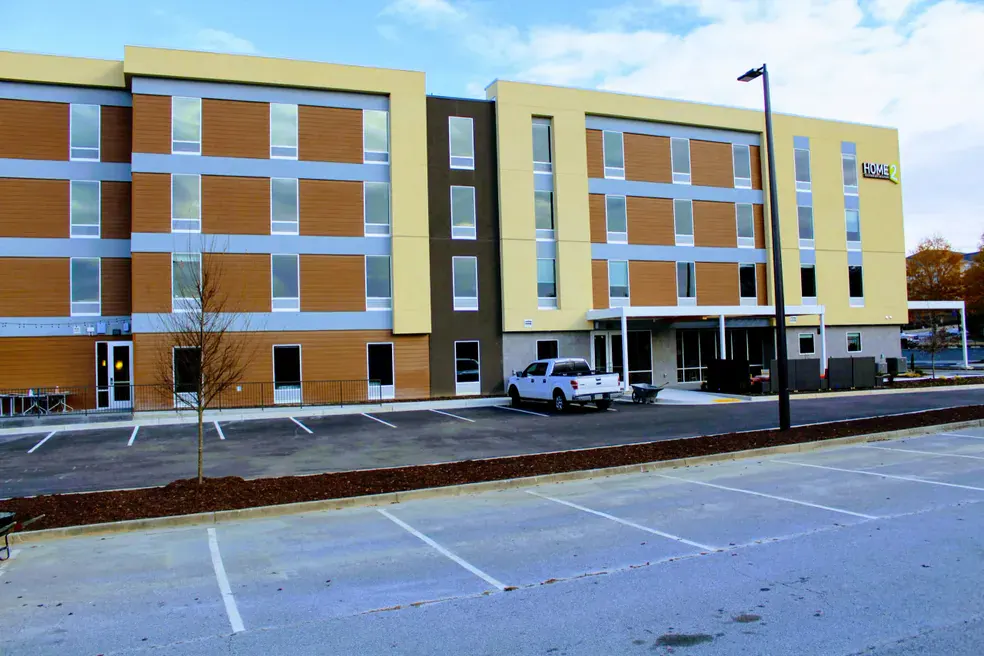
Exterior Joint Sealants
A commercial facade has hundreds of linear feet of perimeter and control joints, and each one is designed to stretch and compress.
Learn more
Expansion Joints
Large stucco and EIFS walls move with temperature, moisture and the structure behind them.
Learn more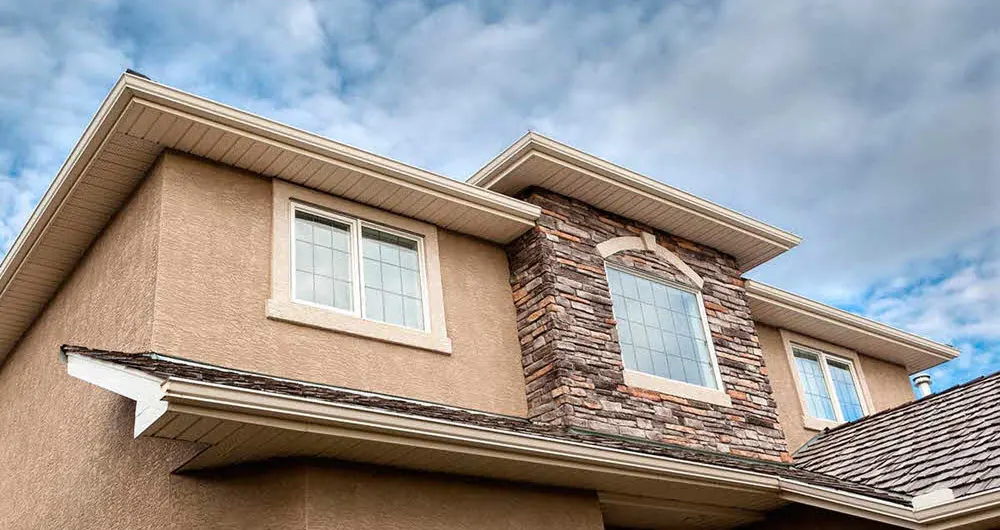
Stucco Repair
A crack or a stain is usually the visible end of a water problem.
Learn more
EIFS Repair
A dent in EIFS is more than cosmetic once the mesh is broken, and a dark streak below a window often means wet foam.
Learn more
Leak Detection
Water behind stucco can travel several feet before it shows up as a stain, and sometimes it never shows at all.
Learn moreChoosing a replacement scope
A single failed window perimeter after a storm can be handled as a spot repair. But sealant on a building usually ages at the same rate, so when several joints fail, the rest are close behind. Replacing joints one complaint at a time means repeated mobilizations and continued water entry in between.
A whole-building program replaces sealant elevation by elevation on a planned schedule, often prioritizing the sun-facing and storm-facing sides. Owners and boards get a defined scope they can budget for, and every joint on the building starts over at the same age.
| Scope | Fits when | Outcome |
|---|---|---|
| Spot replacement | One or two failed joints | Leak stopped locally |
| Elevation replacement | One side aging faster | Worst exposure reset |
| Whole building | Widespread aging | All joints same age |
| Program with inspections | Portfolios, HOAs, condos | Planned renewal cycle |
How we replace failed sealant
Work is scheduled around weather and building operations, with each elevation finished and inspected before we move on.
Survey & prioritize
We inspect the joints on each elevation, note failure types and take moisture readings at stained or suspect locations to find any damage behind the wall.
- Joint condition logged
- Wet areas identified
- Scope ranked by risk
Remove & repair
Old sealant is cut out and joint faces cleaned to sound substrate. Damaged stucco edges, EIFS base coat or wet foam are repaired before resealing.
- Full removal
- Edges rebuilt
- Faces clean and dry
Reseal & report
New backer, primer where required and sealant are installed and tooled. You get photos and a summary of what was replaced on each elevation.
- Joint design restored
- Elevation sign-off
- Photo report in Jobber
Managing several properties?
We can survey each building and lay out a replacement plan by priority so work fits your budget cycle.
What our customers say
Homeowners and long-time commercial clients on working with ASR.
“A quality honest contractor is hard to come by – I’d use ASR for anything I could.”

“Outstanding results and very professional in every aspect during the construction and painting work done. Excellent follow-up by the President to ensure satisfaction during and after the job was completed.”
“We had numerous issues with the stucco on our newly constructed home… The stucco has a unique texture and is pigmented so we were really concerned about getting a good aesthetic match on the repairs… The stucco finish looks incredible and perfectly matches the house in color and texture.”
Sealant replacement questions
What managers, boards and owners ask before replacing sealant on a building.
Can new sealant be applied over the old joints?
How do I know if sealant is failing on my building?
Should we replace every joint or just the failed ones?
What happens if there is damage behind a joint?
Can the work be done with tenants in place?
Plan your sealant replacement
Call (888) 592-1304 or send the form. We will survey the joints, show you what has failed and give you a written scope by elevation.
Request a consultation & estimate
Property managers, owners, HOAs and general contractors: tell us about the building and what you are seeing.
- Call(888) 592-1304
- E-mailinfo@advstucco.com
- Headquarters138 Mountain Brook Dr, Canton, GA 30115
- HoursMon–Fri 8:30 am – 5:30 pm
Send us your project details
Residential or commercial. We’ll get back to you to set up an evaluation.
We never share your information. Prefer to talk? Call (888) 592-1304.